How Much Does Commercial Plywood Cost?
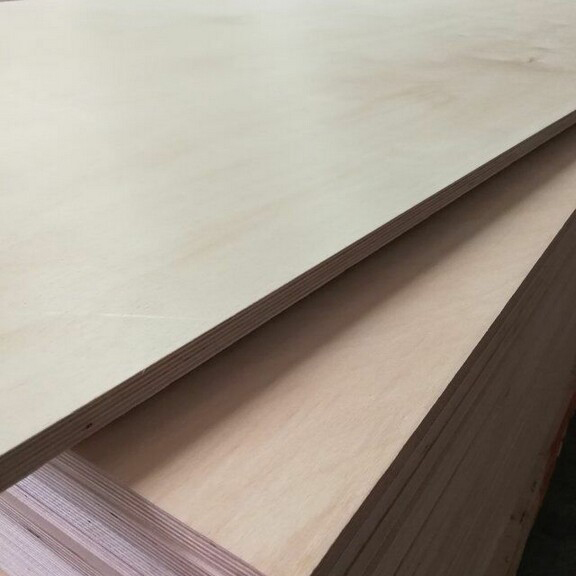
Commercial plywood commonly costs about $20–$80 per 4 × 8 ft sheet, although premium hardwood, exterior-bond, certified, or specialty panels can exceed $100. Current U.S. retail examples show 12 mm Sande plywood near $49.98 and 18 mm near $69.85, while 3/4-inch birch and maple panels are around $74.98 and red oak around $79.98. For a 32 sq. ft. sheet, $40 equals $1.25 per sq. ft., while $80 equals $2.50. Thickness, veneer species, face grade, core construction, adhesive, certification, order volume, freight, and waste rate can change the usable material cost by 10–30% even when two quotations list the same nominal dimensions.
A useful price comparison starts with panel construction rather than the product name. “Commercial plywood” is not one universal grade: it can describe interior hardwood plywood for furniture, sanded panels for cabinets, general-purpose panels, or products made to a buyer’s private specification. APA describes plywood as cross-laminated wood veneers and lists common panel sizes including 4 × 8, 4 × 9, and 4 × 10 ft. A 4 × 8 ft panel provides 32 sq. ft.; therefore, a $64 sheet costs $2.00 per sq. ft. before freight, cutting losses, tax, or storage.
Thickness changes the amount of veneer and adhesive in each panel, but retail data show why thickness cannot be used alone. A current 4 × 8 ft Sande panel in the 1/2-inch category is listed at $49.98, while the 18 mm version is $69.85, a difference of about 39.8%. Moving from 12 mm to 18 mm increases nominal thickness by 50%, yet the observed retail price increase is smaller because manufacturing, distribution, packaging, and retail costs do not rise in the same proportion as wood volume.
| Common specification | Practical price range per 4 × 8 ft sheet* | Cost per sq. ft. |
|---|---|---|
| 6 mm utility/interior | $18–$30 | $0.56–$0.94 |
| 9 mm commercial | $22–$38 | $0.69–$1.19 |
| 12 mm commercial | $30–$55 | $0.94–$1.72 |
| 15 mm commercial | $35–$65 | $1.09–$2.03 |
| 18 mm commercial | $40–$80 | $1.25–$2.50 |
| Premium 18 mm hardwood | $70–$100+ | $2.19–$3.13+ |
*Planning ranges vary by species, grade, country, quantity, certification, and seller. Current retail listings provide useful reference points rather than universal market quotations; for example, 3/4-inch hardwood panels listed by a major U.S. retailer range from $69.85 for Sande to $79.98 for red oak. The roughly 14.5% spread within the same broad thickness category comes largely from face material, manufacturing specification, brand, and distribution position, which leads naturally to veneer and core construction.
Wood species can change both raw-material cost and finished-panel performance. Poplar is commonly selected where lower weight and easy machining matter, while eucalyptus and mixed hardwood cores can provide greater density. Birch faces are often used for furniture and cabinetry where a cleaner appearance is required. A buyer ordering 2,000 sheets at $32 pays $64,000; a $3 species-related increase raises the order to $70,000, or 9.4%, before any freight difference is added.
Core construction deserves equal attention because two 18 mm panels can behave differently on a saw or CNC router. Gaps, overlapping veneers, uneven inner plies, and thickness variation can increase rejected components. If a $30 sheet produces 90% usable material, its effective material cost becomes $33.33 per fully usable-sheet equivalent. A $32 panel producing 98% usable material costs $32.65 on the same basis. The nominally cheaper panel is therefore about 2.1% more expensive after material loss.
Face and back grades add another pricing layer. A cabinet component with an exposed surface may require a cleaner veneer with fewer repairs, knots, splits, or color variations, while a panel covered by laminate can often use a less expensive visual grade. APA’s sanded-plywood guidance covers grade designations, bond classifications, panel thickness, species groups, and ordering information, illustrating why surface grade is only one part of a complete specification. Paying 12% more for a decorative face may be reasonable for exposed furniture but unnecessary for a concealed cabinet component.
Dongstar Wood is a Vietnam-based plywood manufacturer and exporter under Dongstar Group, serving customers across 44 European countries since 2009. We specialize in commercial plywood, film faced plywood, construction plywood, birch plywood, furniture plywood, and customized plywood solutions.
Backed by CE 2+, FSC®, EUDR, DOP, and SEDEX (BSCI) certifications, we meet European standards for quality, sustainability, and compliance. With over 15 years of manufacturing and export experience, we support importers, distributors, furniture manufacturers, and construction companies with reliable plywood supply and OEM/ODM solutions.
Bond classification becomes more important when panels move from dry furniture interiors into construction or areas exposed to moisture. In the United States, PS 1-22 covers structural plywood species, veneer grading, adhesive bonds, construction, workmanship, dimensions, tolerances, and moisture content; the standard was revised in 2023. Exterior-bond products normally cost more than basic interior panels because the adhesive system and manufacturing requirements differ, so comparing a low-cost interior sheet against an exterior-rated sheet produces a misleading percentage difference.
Construction buyers may also encounter CDX Pine Plywood, but “CDX” should not be treated as a complete modern structural specification. APA’s 2022 specification guidance recommends identifying grade, span rating, bond classification, dimensions, edge treatment, and APA trademark rather than relying on older “CDX” terminology alone. For a 10,000 sq. ft. sheathing job, even a $0.20 difference per sq. ft. changes material expenditure by $2,000, so comparable performance requirements need to be established before comparing quotations.
Dimensions can create smaller differences that become substantial at container scale. APA notes that structural panels may be manufactured slightly below the traditional 48 × 96-inch dimensions for spacing, with some standards permitting trimming of up to 1/8 inch in length and width. Since 2008, APA panels have also used both a Performance Category and decimal thickness designation. An importer buying 5,000 panels should therefore confirm actual dimensions and thickness tolerances instead of assuming every nominal 18 mm or 3/4-inch panel contains exactly the same amount of material.
Quantity changes the commercial calculation again. A retail buyer may purchase one sheet, while a distributor can purchase hundreds or thousands in one shipment. Suppose a factory quotation falls from $31 to $28 per sheet when volume rises from 500 to 2,000 sheets. The unit reduction is 9.7%, and gross material expenditure becomes $56,000 instead of $62,000 at the original unit rate. That $6,000 difference still has to be compared with inventory time, financing, warehouse space, and the probability that all 2,000 sheets will be used.
Freight can narrow or erase a factory-price difference. Assume Supplier A quotes $27 FOB and Supplier B quotes $29. After ocean freight, port handling, inland transport, insurance, and import costs, A reaches $36 while B reaches $35.50. Supplier A started 6.9% cheaper but finishes 1.4% more expensive on landed cost. For commercial importers, the useful comparison is therefore cost per delivered sheet, square meter, or cubic meter under the same Incoterm and destination.
Waste should then be added to landed cost. An 18 mm panel delivered at $36 with 5% cutting and defect loss has an adjusted material cost of about $37.89 per usable-sheet equivalent. Raise loss to 12% and the figure becomes $40.91, an increase of 8.0% without any change in the invoice price. Furniture manufacturers can measure this using 100–300 sheets from each incoming production lot and record thickness, delamination, face defects, core gaps, machining quality, and usable cutting yield.
Certification and compliance can add another layer to the quotation because documentation, audits, timber sourcing, testing, and production controls have costs. A buyer should specify the required standard rather than asking generally for “certified plywood.” PS 1-22 was revised in 2023, while PS 2-18 was revised in 2019 and covers performance requirements, adhesive bond performance, construction, workmanship, dimensions, tolerances, marking, and moisture content for structural-use panels. Paying 3–8% more for a required documented specification can be less expensive than receiving material that cannot be accepted for the intended market.
A quotation becomes easier to compare when every supplier receives the same request: 1220 × 2440 × 18 mm size, specified thickness tolerance, named core species, face/back grade, bond requirement, sanding requirement, emission requirement, certification, moisture specification, packaging, quantity, destination, and Incoterm. If three suppliers quote $27.50, $29.00, and $31.00, the spread from lowest to highest is 12.7%; that percentage has little purchasing relevance until all three offers describe materially comparable panels.
For furniture production, machining cost belongs in the same calculation. Suppose 1,000 sheets at $30 generate 7% rejection, while an alternative at $32 generates 2%. Material expenditure starts at $30,000 versus $32,000, but rejected material represents roughly $2,100 versus $640 before labor, machine time, replacement freight, or production delay. A difference of only $2 per sheet can therefore become smaller than the cost created by a 5-percentage-point difference in usable yield.
Retail benchmarks provide a final reference for judging whether a quoted range is plausible. Current U.S. listings show an 18 mm Sande 4 × 8 ft sheet at $69.85, 3/4-inch birch and maple at $74.98, and red oak at $79.98; the highest of those four examples is about 14.5% above the lowest. Wholesale factory orders can sit well below retail levels, but comparisons should keep thickness, species, grade, bond, certification, quantity, delivery term, and usable yield on the same basis before a per-sheet price is accepted.