Which Beer Brewing Equipment Configuration Fits Your Production Plan?
A brewhouse should be sized from the planned packaged volume, brew frequency, fermentation time, packaging speed, and utility capacity rather than vessel volume alone. A 10 BBL system producing two 10 BBL brews per day for 220 production days has a theoretical brewhouse output of 4,400 BBL/year, but actual saleable volume will be lower after fermentation, transfer, dry-hopping, cleaning, packaging, and downtime. In the U.S., one beer barrel equals 31 gallons, and the Brewers Association reported 23.1 million barrels of craft beer production in 2024, down 3.9% from 2023.
A useful equipment plan starts with the annual sales target. A brewery planning 1,500 BBL of packaged beer needs to translate that target into weekly production, peak-month volume, number of brews, fermenter occupancy, and packaging hours. For example, at 50 production weeks, 1,500 BBL equals 30 BBL per week. A 10 BBL brewhouse would need three full brews per week before process losses. Adding a fourth brew provides more scheduling room, but only if the cellar and packaging areas can accept the additional beer.
Plan around saleable barrels, not nominal tank capacity.
That distinction matters because a 10 BBL brewhouse does not necessarily deliver 10 BBL of finished packaged beer. Kettle trub, hop absorption, yeast removal, tank bottoms, sampling, transfers, and packaging can reduce the quantity sold. Losses also vary by beer. A heavily dry-hopped IPA may leave more material behind than a pale lager, while filtration introduces another potential source of volume loss. A production worksheet should therefore separate wort volume, post-fermentation volume, conditioned volume, and packaged volume.
The next calculation is brew frequency. If a brewery produces 1,800 BBL per year and schedules 48 production weeks, it needs an average of 37.5 BBL per week. With a 15 BBL brewhouse, that is 2.5 brews per week; in practice, the schedule may become two or three brew days depending on recipe size and demand. The same annual output can also be produced with a 10 BBL system running more frequently. The difference appears in labor, cleaning frequency, heating demand, water use, and the amount of production time available for maintenance.
A smaller brewhouse can make sense when the brewery sells many different beers. If 12 beers share a 1,200 BBL annual program, the average volume per beer is only 100 BBL before seasonal adjustments. Large vessels would force longer production runs or larger inventories. Several smaller fermenters allow the brewer to produce 5, 10, or 15 BBL batches without putting a large tank out of service for a small release.
| Production pattern | Typical equipment direction |
|---|---|
| Taproom-led, frequent seasonal beers | 3–7 BBL brewhouse, several smaller fermenters |
| Local distribution, mixed draft/package | 7–15 BBL brewhouse, mixed FV sizes |
| Flagship-heavy production | 15–30+ BBL brewhouse, larger FV capacity |
| High packaged volume | Larger brewhouse plus higher-speed packaging and cold storage |
The fermenter schedule often sets the practical output. Suppose a 10 BBL brewhouse feeds six 10 BBL fermenters and average tank occupancy is 14 days. Under an ideal schedule, each vessel can complete about 26 cycles per year, giving 1,560 BBL of nominal fermentation capacity. Real production will be lower because tanks also require transfer, cleaning, sanitation, inspection, and preparation. If occupancy rises to 21 days, annual theoretical capacity drops to about 1,040 BBL. A 50% increase in tank residence from 14 to 21 days therefore changes cellar capacity substantially without changing brewhouse size.
The same principle applies to lager production. A brewery producing beers that remain in the cellar for four weeks may need roughly twice the fermentation capacity of a similar brewery producing beers that average two weeks in the tank. The equipment plan should use the longest realistic tank-residence periods for products that represent a significant share of annual volume rather than relying on the shortest possible cycle.
A 20 BBL fermenter paired with a 10 BBL brewhouse can work well for a core beer because two brews fill one vessel, while 10 BBL fermenters provide greater flexibility for smaller brands.
A mixed cellar is often more practical than making every fermenter identical. A brewery could use 20 BBL vessels for its two largest brands and 10 BBL vessels for seasonal or specialty products. This reduces unnecessary double-batching for small-volume beers while allowing larger brands to occupy fewer tanks. The best mix depends on the sales distribution, not simply the brewhouse dimensions.
The cellar also depends on brite-tank scheduling. If a brewery conditions and carbonates beer before packaging, the brite tank becomes part of the available production space. A 20 BBL brite tank filled from a 20 BBL fermenter may remain occupied for several days if packaging is slow. Two brews per day can therefore create more finished beer than the packaging area can process. Breweries adding tanks without increasing packaging capacity can reach a point where finished beer waits for the filler rather than the filler waiting for beer.
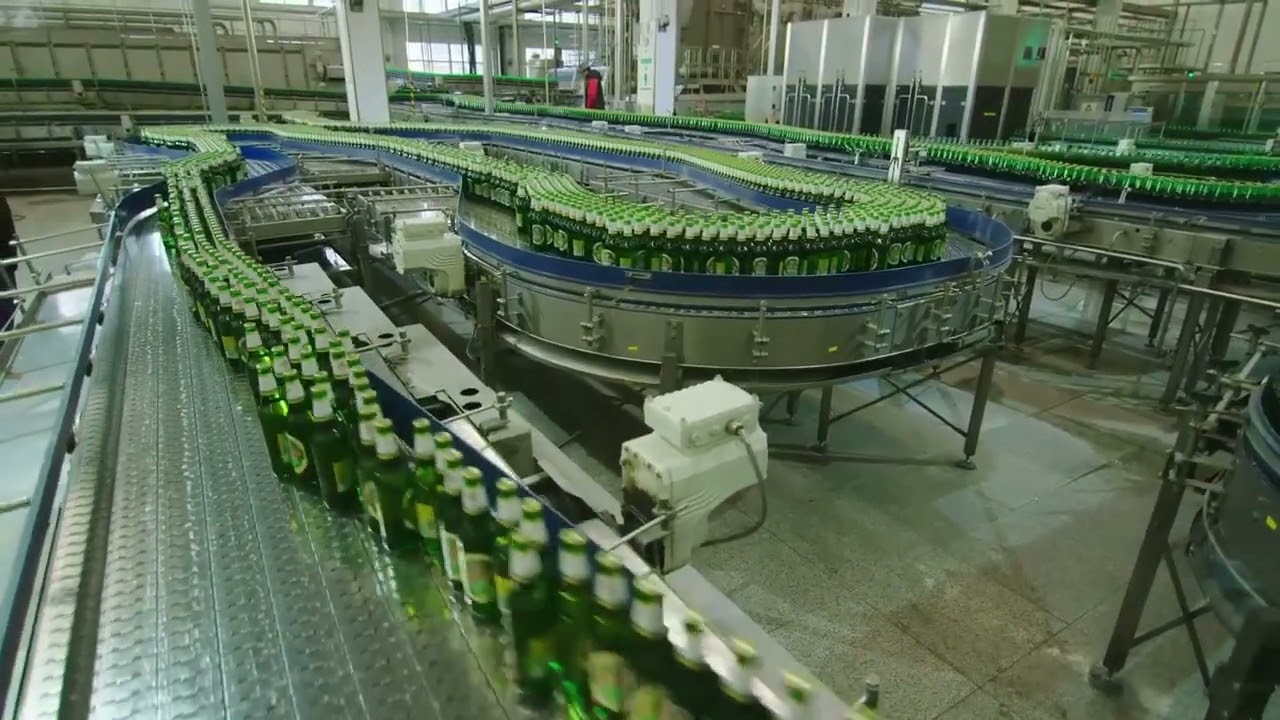
Packaging requirements should be calculated in barrels per hour. A brewery that needs to package 60 BBL over three days requires an average of 20 BBL per day, but the actual equipment requirement depends on setup time, container changes, sanitation, changeovers, inspection, and breaks. A canning line that operates at 30 cans per minute can theoretically fill 1,800 cans per hour; actual output will be lower once stoppages and packaging changes are included. The number and size of finished-goods packages should therefore be modeled with realistic operating hours.
Recent U.S. packaging data also show why package mix deserves specific planning. Brewers Association 2024 scan data found that four package formats—singles, 4-packs, 6-packs, and 12-packs—accounted for 96% of craft volume share in that dataset, while 6-packs alone represented 46%. A brewery selling mainly draft beer has very different packaging equipment needs from one shipping cans through multiple retail channels.
Water-heating capacity should be calculated at the same time. For two brews in one day, the hot liquor tank must support mashing, sparging, equipment cleaning, and recovery for the next operation. A 15 BBL brewhouse may be mechanically capable of two turns per day, but slow hot-water recovery can extend the actual brew schedule. Cold liquor storage and wort cooling also need enough capacity for the highest simultaneous demand rather than an average daily load.
Heating method changes the facility requirements. Electric systems can work well for smaller installations where electrical service is sufficient. Direct-fire systems rely on gas supply, combustion controls, and appropriate ventilation. Steam systems add boiler capacity, water treatment, condensate handling, piping, and inspection requirements, but can supply several process loads from one steam source. A brewery expecting production to increase by 100% over several years should assess whether the original utility infrastructure can support additional vessels before purchasing the initial brewhouse.
Cooling deserves the same treatment. Glycol demand comes from fermentation, cold crashing, brite tanks, and cellar temperature control. A brewery may have six fermenters but only need active cooling on three at a time during a typical week; peak demand changes when several tanks are fermenting while another vessel is being cold crashed. A 30% expansion in cellar volume can therefore require more than a simple tank-for-tank addition if the existing chiller has little spare capacity.
Cleaning should also be included in the production calendar. Every fermenter, brite tank, brewhouse vessel, heat exchanger, hose, and packaging component needs a defined cleaning and sanitation cycle. A tank cannot be counted as available immediately after transfer. If cleaning and preparation take four hours per vessel, six tanks create up to 24 hours of scheduled cleaning work across a full six-vessel turnover. A CIP system becomes increasingly useful as the number of vessels and daily transfers increases.
For a brewery planning 2,500 BBL per year, a simple model might look like this:
| Item | Planning value |
|---|---|
| Annual packaged target | 2,500 BBL |
| Production weeks | 50 |
| Average weekly output | 50 BBL |
| Brewhouse | 10 BBL |
| Average brews/week | 5 |
| Average tank residence | 14 days |
| Planned capacity allowance | 15–20% |
| Package mix | Draft + cans |
The 15–20% allowance is not a universal industry standard; it is a planning example covering schedule gaps, maintenance, seasonal variation, and process losses. The actual figure should come from the brewery's own operating history or pilot production data. A brewery with long shutdown periods may need more capacity than one operating almost continuously.
Production forecasts should also reflect the wider market. The Brewers Association reported 9,796 operating U.S. craft breweries in 2024, including 3,936 taproom breweries and 3,552 brewpubs; total craft production was 23.1 million barrels, down 3.9% from the prior year. These figures support treating taproom production, distribution production, and package-led production as different operating models rather than assuming one standard brewery configuration.
For businesses choosing a hgmc brew system, the equipment specification should therefore be tied to the intended production schedule: brewhouse volume, vessel count, fermenter-to-brewhouse ratio, brite-tank capacity, glycol output, hot-liquor recovery, CIP configuration, packaging rate, cold storage, and future tank connections. A brewery producing 1,000 BBL per year with 15 beer styles may need a very different cellar arrangement from one producing 1,000 BBL of a single flagship product.
Facility layout also affects future production. Floor drains, ceiling height, access routes, electrical panels, gas piping, steam distribution, glycol headers, water lines, wastewater capacity, and pallet movement should be considered before tanks are installed. Adding a fermenter is much easier when the original piping and floor plan allow another vessel to be connected without relocating production equipment.
Regulatory planning should be included as well. In the United States, TTB defines a beer barrel as 31 U.S. gallons, and its beer rules distinguish production and tax treatment by brewer and annual volume. These requirements do not determine the mechanical size of a brewhouse, but they form part of the production and financial model used to plan a commercial facility.
The final equipment configuration should be tested against a full weekly schedule. Put every planned brew on a calendar, assign a fermenter, allow for fermentation and conditioning, schedule cleaning, allocate brite-tank time, and place packaging runs on specific days. Then increase demand by 20–30% and test whether the same system can handle the busier period. If the cellar fills first, additional fermenters may matter more than a larger brewhouse. If packaging hours are exhausted first, a faster filler may matter more than another brewing vessel. If hot-water recovery delays every brew day, utility equipment may need adjustment before brewhouse capacity is increased.