What can you do with a portable laser scanner in the field?
Advancements in 3D scanning have redefined the possibilities of fieldwork across numerous disciplines, and among the most impactful tools to emerge is the portable laser scanner. Once limited to controlled lab environments, laser scanning has gone mobile—offering researchers, conservationists, filmmakers, and environmental scientists a powerful way to capture highly accurate spatial data directly on location. With increasing accessibility and user-friendly designs, portable laser scanners are changing how we document, study, and interact with the world around us.
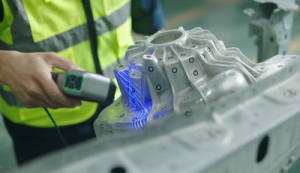 One of the most groundbreaking applications of portable laser scanners in the field lies in the preservation of cultural heritage. Archaeological expeditions that once relied on hand-drawn maps and fragile measuring tools can now produce digital twins of entire sites in a fraction of the time. Dr. Sarah Parcak, a renowned archaeologist known for integrating technology with traditional fieldwork, noted in a recent panel discussion: “Portable laser scanners allow us to digitize delicate ruins without touching them. It’s a way of preserving the past before it's erased by time, development, or climate change.”
In 2022, a collaborative team from France and Egypt used portable laser scanning technology to document the inner chambers of lesser-known pyramids that were previously inaccessible to bulky equipment. The scans revealed not only the intricate engineering of these ancient structures but also hidden inscriptions missed by the naked eye. The ability to capture such details without excavation means more ethical, non-invasive methods are becoming standard in archaeological conservation.
Portable laser scanners are also proving essential in environmental research. In Canada’s boreal forests, researchers from the University of British Columbia deployed scanners to measure changes in forest density over time. By scanning tree canopies, underbrush, and terrain, they were able to produce high-resolution 3D models that helped monitor biodiversity and track the impacts of climate change. These detailed scans provided insights into carbon storage capacities and informed sustainable forest management strategies.
What makes portable laser scanner particularly valuable in field environments is their resilience and adaptability. They are built to withstand a wide range of outdoor conditions—from the humid tropics to arid deserts and icy mountain ranges. Scientists conducting glacial surveys in Iceland, for example, have used portable scanners to document the retreat of ice sheets with centimeter-level precision. This kind of detailed longitudinal data is vital in constructing accurate models for climate forecasting.
In the field of geology, portable laser scanners offer a rapid and detailed way to capture surface formations, fault lines, and erosion patterns. A case study from the University of Tokyo involved scanning the aftermath of a landslide in a remote Japanese valley. The team used a portable scanner to create a full 3D reconstruction of the affected terrain within hours of the event. These reconstructions are not only useful for scientific analysis but also crucial for emergency response planning and infrastructure recovery.
The creative industries have also tapped into the potential of field scanning. Visual effects professionals, game developers, and virtual reality creators are now frequently taking portable laser scanners into real-world environments. For example, to create immersive worlds in video games, designers are scanning natural landscapes like rock formations, caves, and forests to capture textures and forms that would be impossible to replicate manually. Jake Morrison, an FX supervisor known for his work on major films, stated, “A portable scanner is like having a digital net—you throw it over reality and bring it back into your workstation.”
Educators and independent creators are further pushing the boundaries of what’s possible. From scanning fossils at dig sites to modeling historic architecture for virtual museum tours, the democratization of portable scanning is enabling people to create and share high-fidelity digital replicas with global audiences. In one particularly inspiring example, a group of high school students in Italy used a portable laser scanner to document a Roman aqueduct in their hometown, turning the data into an educational virtual walkthrough available online.
One of the most groundbreaking applications of portable laser scanners in the field lies in the preservation of cultural heritage. Archaeological expeditions that once relied on hand-drawn maps and fragile measuring tools can now produce digital twins of entire sites in a fraction of the time. Dr. Sarah Parcak, a renowned archaeologist known for integrating technology with traditional fieldwork, noted in a recent panel discussion: “Portable laser scanners allow us to digitize delicate ruins without touching them. It’s a way of preserving the past before it's erased by time, development, or climate change.”
In 2022, a collaborative team from France and Egypt used portable laser scanning technology to document the inner chambers of lesser-known pyramids that were previously inaccessible to bulky equipment. The scans revealed not only the intricate engineering of these ancient structures but also hidden inscriptions missed by the naked eye. The ability to capture such details without excavation means more ethical, non-invasive methods are becoming standard in archaeological conservation.
Portable laser scanners are also proving essential in environmental research. In Canada’s boreal forests, researchers from the University of British Columbia deployed scanners to measure changes in forest density over time. By scanning tree canopies, underbrush, and terrain, they were able to produce high-resolution 3D models that helped monitor biodiversity and track the impacts of climate change. These detailed scans provided insights into carbon storage capacities and informed sustainable forest management strategies.
What makes portable laser scanner particularly valuable in field environments is their resilience and adaptability. They are built to withstand a wide range of outdoor conditions—from the humid tropics to arid deserts and icy mountain ranges. Scientists conducting glacial surveys in Iceland, for example, have used portable scanners to document the retreat of ice sheets with centimeter-level precision. This kind of detailed longitudinal data is vital in constructing accurate models for climate forecasting.
In the field of geology, portable laser scanners offer a rapid and detailed way to capture surface formations, fault lines, and erosion patterns. A case study from the University of Tokyo involved scanning the aftermath of a landslide in a remote Japanese valley. The team used a portable scanner to create a full 3D reconstruction of the affected terrain within hours of the event. These reconstructions are not only useful for scientific analysis but also crucial for emergency response planning and infrastructure recovery.
The creative industries have also tapped into the potential of field scanning. Visual effects professionals, game developers, and virtual reality creators are now frequently taking portable laser scanners into real-world environments. For example, to create immersive worlds in video games, designers are scanning natural landscapes like rock formations, caves, and forests to capture textures and forms that would be impossible to replicate manually. Jake Morrison, an FX supervisor known for his work on major films, stated, “A portable scanner is like having a digital net—you throw it over reality and bring it back into your workstation.”
Educators and independent creators are further pushing the boundaries of what’s possible. From scanning fossils at dig sites to modeling historic architecture for virtual museum tours, the democratization of portable scanning is enabling people to create and share high-fidelity digital replicas with global audiences. In one particularly inspiring example, a group of high school students in Italy used a portable laser scanner to document a Roman aqueduct in their hometown, turning the data into an educational virtual walkthrough available online.
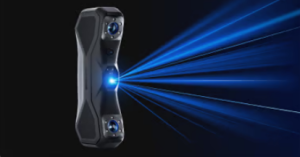 Even in humanitarian efforts, portable laser scanners are finding their place. Teams working in disaster zones have used them to assess damage in earthquake-hit areas where GPS or satellite data may be limited or unreliable. With quick scans of buildings, streets, and terrain, responders can develop accurate maps that help guide aid and reconstruction efforts, often within hours of deployment.
In all these cases, the common thread is the ability to capture reality—accurately, efficiently, and in a way that supports analysis, preservation, and storytelling. The portable laser scanner has emerged as a quiet but revolutionary device that empowers users not only to observe the world but to digitally preserve it with remarkable fidelity. It represents a bridge between the physical and digital realms, and its role in field applications will only grow as technology continues to evolve.
From uncovering secrets of the past to modeling the future of our planet, the portable laser scanner is a field companion that brings science, culture, and creativity together in unprecedented ways. For anyone working beyond the walls of an office or lab, this tool is no longer a luxury—it’s a necessity.
Even in humanitarian efforts, portable laser scanners are finding their place. Teams working in disaster zones have used them to assess damage in earthquake-hit areas where GPS or satellite data may be limited or unreliable. With quick scans of buildings, streets, and terrain, responders can develop accurate maps that help guide aid and reconstruction efforts, often within hours of deployment.
In all these cases, the common thread is the ability to capture reality—accurately, efficiently, and in a way that supports analysis, preservation, and storytelling. The portable laser scanner has emerged as a quiet but revolutionary device that empowers users not only to observe the world but to digitally preserve it with remarkable fidelity. It represents a bridge between the physical and digital realms, and its role in field applications will only grow as technology continues to evolve.
From uncovering secrets of the past to modeling the future of our planet, the portable laser scanner is a field companion that brings science, culture, and creativity together in unprecedented ways. For anyone working beyond the walls of an office or lab, this tool is no longer a luxury—it’s a necessity.
One of the most groundbreaking applications of portable laser scanners in the field lies in the preservation of cultural heritage. Archaeological expeditions that once relied on hand-drawn maps and fragile measuring tools can now produce digital twins of entire sites in a fraction of the time. Dr. Sarah Parcak, a renowned archaeologist known for integrating technology with traditional fieldwork, noted in a recent panel discussion: “Portable laser scanners allow us to digitize delicate ruins without touching them. It’s a way of preserving the past before it's erased by time, development, or climate change.”
In 2022, a collaborative team from France and Egypt used portable laser scanning technology to document the inner chambers of lesser-known pyramids that were previously inaccessible to bulky equipment. The scans revealed not only the intricate engineering of these ancient structures but also hidden inscriptions missed by the naked eye. The ability to capture such details without excavation means more ethical, non-invasive methods are becoming standard in archaeological conservation.
Portable laser scanners are also proving essential in environmental research. In Canada’s boreal forests, researchers from the University of British Columbia deployed scanners to measure changes in forest density over time. By scanning tree canopies, underbrush, and terrain, they were able to produce high-resolution 3D models that helped monitor biodiversity and track the impacts of climate change. These detailed scans provided insights into carbon storage capacities and informed sustainable forest management strategies.
What makes portable laser scanner particularly valuable in field environments is their resilience and adaptability. They are built to withstand a wide range of outdoor conditions—from the humid tropics to arid deserts and icy mountain ranges. Scientists conducting glacial surveys in Iceland, for example, have used portable scanners to document the retreat of ice sheets with centimeter-level precision. This kind of detailed longitudinal data is vital in constructing accurate models for climate forecasting.
In the field of geology, portable laser scanners offer a rapid and detailed way to capture surface formations, fault lines, and erosion patterns. A case study from the University of Tokyo involved scanning the aftermath of a landslide in a remote Japanese valley. The team used a portable scanner to create a full 3D reconstruction of the affected terrain within hours of the event. These reconstructions are not only useful for scientific analysis but also crucial for emergency response planning and infrastructure recovery.
The creative industries have also tapped into the potential of field scanning. Visual effects professionals, game developers, and virtual reality creators are now frequently taking portable laser scanners into real-world environments. For example, to create immersive worlds in video games, designers are scanning natural landscapes like rock formations, caves, and forests to capture textures and forms that would be impossible to replicate manually. Jake Morrison, an FX supervisor known for his work on major films, stated, “A portable scanner is like having a digital net—you throw it over reality and bring it back into your workstation.”
Educators and independent creators are further pushing the boundaries of what’s possible. From scanning fossils at dig sites to modeling historic architecture for virtual museum tours, the democratization of portable scanning is enabling people to create and share high-fidelity digital replicas with global audiences. In one particularly inspiring example, a group of high school students in Italy used a portable laser scanner to document a Roman aqueduct in their hometown, turning the data into an educational virtual walkthrough available online.
Even in humanitarian efforts, portable laser scanners are finding their place. Teams working in disaster zones have used them to assess damage in earthquake-hit areas where GPS or satellite data may be limited or unreliable. With quick scans of buildings, streets, and terrain, responders can develop accurate maps that help guide aid and reconstruction efforts, often within hours of deployment.
In all these cases, the common thread is the ability to capture reality—accurately, efficiently, and in a way that supports analysis, preservation, and storytelling. The portable laser scanner has emerged as a quiet but revolutionary device that empowers users not only to observe the world but to digitally preserve it with remarkable fidelity. It represents a bridge between the physical and digital realms, and its role in field applications will only grow as technology continues to evolve.
From uncovering secrets of the past to modeling the future of our planet, the portable laser scanner is a field companion that brings science, culture, and creativity together in unprecedented ways. For anyone working beyond the walls of an office or lab, this tool is no longer a luxury—it’s a necessity.